



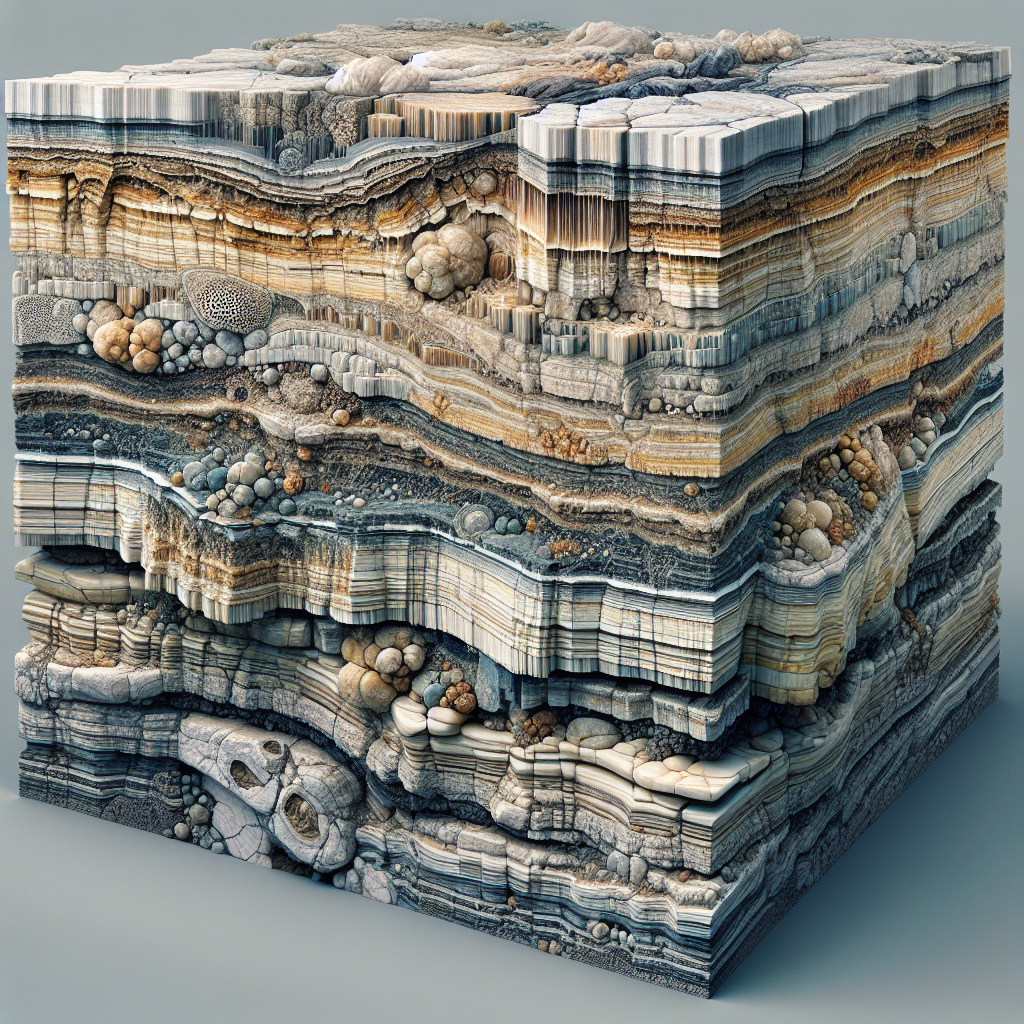
Florida’s unique geological composition is primarily characterized by its extensive **limestone foundation**. This intriguing natural phenomenon is a result of millions of years of geological processes, which have shaped the state’s landscape and contributed to its distinctive features. Limestone, a sedimentary rock composed mainly of calcium carbonate, plays a significant role in Florida’s topography and ecosystem. Its presence is not merely a coincidence but a testament to the state’s ancient history, where seas once covered the region, allowing marine organisms to deposit layers of calcium-rich shells and skeletons over time.
The impact of this limestone base is profound, influencing not only the **geological stability** of Florida but also its architectural and construction practices. Buildings and roads often rely on the strength and availability of local limestone, making it a crucial element in the development of infrastructure. Moreover, limestone’s porous nature affects Florida’s aquifer systems, contributing to the state’s fresh water supply and creating unique geological formations like sinkholes and springs.
Understanding why *Florida is built on limestone* provides insight into both the historical and environmental aspects of the state. It also highlights the importance of sustainable practices in the extraction and usage of limestone to preserve Florida’s natural heritage. For personalized guidance on selecting the perfect stone for your project, call us today to schedule an appointment: (561) 810-8586 in Boynton Beach, (954) 984-7007 in Pompano Beach.
Geological History of Florida Limestone
The geological history of Florida’s limestone is a captivating tale that stretches back millions of years. During the **Eocene Epoch**, about 55 to 34 million years ago, much of what is now the southeastern United States, including Florida, was submerged under a warm, shallow sea. This sea was teeming with marine life, including corals, shellfish, and other organisms whose calcium-rich skeletons and shells accumulated on the ocean floor. Over time, these deposits compacted and solidified, eventually forming the vast layers of limestone that underpin much of the state today.
Throughout the **Oligocene and Miocene epochs**, the seas receded and advanced multiple times, leading to various periods of limestone deposition. During these times, different types of limestone were formed, each with unique characteristics and compositions, including the well-known **Ocala Limestone** and the **Miami Limestone**. These formations are not only crucial to understanding the **geological evolution** of the area but also serve as important aquifers that supply fresh water to the region.
The dynamic geological history of Florida, driven by tectonic movements and changing sea levels, has resulted in a landscape marked by **karst topography**—a terrain shaped by the dissolution of soluble rocks, including limestone. This has led to the creation of notable features such as sinkholes, underground rivers, and caves, which are not only fascinating geological formations but also vital to the state’s water management and biodiversity.
Environmental Impact of Limestone in Florida

The presence of limestone in Florida has a profound impact on the environment, influencing everything from water quality to ecosystem diversity. **Limestone formations** are critical for the state’s freshwater supply, as they make up the primary aquifers, such as the **Floridan Aquifer System**, which provides water to millions of residents. These aquifers are highly porous, allowing for efficient groundwater movement and storage. However, this permeability also makes them vulnerable to contamination from surface pollutants, making it essential to protect these vital resources.
In addition to its role in water supply, Florida’s limestone has contributed to the state’s unique landscape, characterized by **karst features** like springs, sinkholes, and caves. These formations create diverse habitats that support a wide range of species, including many that are endemic to the region. The springs, in particular, are known for their crystal-clear waters and are home to species such as manatees, fish, and numerous aquatic plants. Unfortunately, human activities, including urban development and agriculture, can disrupt these delicate ecosystems, leading to habitat loss and decreased biodiversity.
Limestone mining, an essential industry in Florida, plays a significant role in the state’s economy by providing materials for construction and infrastructure. However, the extraction process can lead to **environmental concerns**, such as habitat destruction, dust pollution, and changes in local hydrology. Efforts to mitigate these impacts include implementing sustainable mining practices and restoring ecosystems post-mining. Such measures are crucial to balancing economic interests with environmental preservation, ensuring that Florida’s natural limestone resources continue to support both human and ecological needs.
Influence of Limestone on Florida Architecture
Limestone’s abundant presence in Florida has significantly shaped the architectural landscape of the state. Known for its durability and aesthetic appeal, limestone has been a preferred building material for centuries. Its use in **Florida architecture** is evident in the historical and modern structures that dot the region, from grand public buildings to charming residential homes.
One of the most notable examples of limestone in Florida architecture is the use of **coquina**, a type of limestone composed mostly of shell fragments. This material was used in the construction of the **Castillo de San Marcos** in St. Augustine, the oldest masonry fort in the continental United States. The porous nature of coquina enabled it to absorb and withstand cannon fire, showcasing its impressive resilience. Similarly, many historical buildings in the area feature limestone, lending a unique character and historical significance to the region.
In contemporary architecture, limestone continues to be a popular choice for its natural beauty and versatility. It is used for both exterior and interior applications, including facades, flooring, and decorative elements. The stone’s neutral tones complement a variety of design styles, from traditional to modern, making it a versatile choice for architects and designers. Moreover, its ability to keep buildings cool in Florida’s hot climate adds a functional advantage, contributing to energy efficiency.
The influence of limestone on Florida architecture extends beyond aesthetics and functionality; it also reflects a deep connection to the state’s geological history. By incorporating limestone into their designs, architects pay homage to the region’s natural heritage, creating structures that are not only visually appealing but also grounded in the local landscape. This enduring relationship between limestone and Florida architecture underscores the material’s significance, both as a practical building resource and a symbol of regional identity.
Economic Significance of Florida Limestone

Florida’s limestone deposits are not just a foundation for its geography and architecture but also a cornerstone of its economy. The **economic significance** of limestone in Florida extends across various industries, from construction to agriculture, underscoring its vital role in the state’s financial landscape.
One of the primary economic contributions of Florida limestone is in the construction industry. Limestone is a key component in the production of cement and aggregates, materials essential for building infrastructure. The demand for limestone-driven products supports numerous jobs in mining, transportation, and construction, making it a crucial economic driver. The abundance of local limestone reduces construction costs and supports the development of infrastructure projects, from roads and bridges to commercial and residential buildings.
Beyond construction, limestone also plays a pivotal role in Florida’s agricultural sector. It is used to produce lime, which is vital for enhancing soil quality and increasing crop yield. Lime neutralizes acidic soils, providing essential nutrients that help cultivate Florida’s diverse range of crops, including citrus fruits and vegetables. This application not only supports agricultural productivity but also bolsters the state’s economy through the export of agricultural products.
Additionally, the mining and processing of limestone contribute significantly to the state’s revenue through taxes and royalties. The industry supports local economies, especially in regions where limestone deposits are prevalent, by providing employment opportunities and stimulating local businesses.
The economic impact of Florida’s limestone is multifaceted, influencing sectors beyond its immediate extraction and production. Its importance is reflected in the sustained growth of industries reliant on this versatile resource, cementing its place as a fundamental component of Florida’s economic framework.
Conservation and Future of Limestone in Florida

The conservation and future of limestone in Florida are critical topics that involve balancing the state’s economic interests with environmental sustainability. As limestone mining continues to support various industries, **conservation efforts** are essential to preserve natural ecosystems and ensure the resource remains available for future generations.
Florida’s limestone regions are home to unique ecosystems that require careful management to mitigate the environmental impact of mining activities. This involves implementing sustainable practices such as **reclamation**—restoring mined lands to their natural or economically usable states. Reclamation efforts not only help maintain biodiversity but also contribute to the state’s environmental health by reducing erosion and promoting water quality.
Furthermore, the future of limestone in Florida depends on **innovations in mining technology**. Adopting more efficient methods can minimize waste and environmental disruption while maximizing the resource’s economic potential. This includes exploring new technologies that reduce the carbon footprint of limestone extraction and processing, aligning with broader sustainability goals.
Legislative measures and industry standards also play a pivotal role in shaping the future of limestone. By enforcing regulations that govern mining activities, Florida can ensure responsible resource management that balances economic benefits with ecological preservation.
As we look to the future, it is imperative to engage in dialogues that consider both the economic and environmental aspects of limestone utilization. By fostering partnerships between government, industry, and environmental organizations, Florida can pave the way for a sustainable limestone industry.
**Call Us Today to Schedule an Appointment:** (561) 810-8586 in Boynton Beach, (954) 984-7007 in Pompano Beach. Discover how our premium stone slabs can complement sustainable design practices in your next project.